
Starting Over
My thoughts on Ella McCay

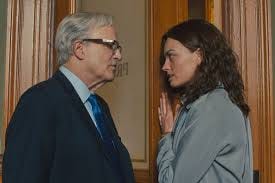
There was once a time when the arrival of a new film from James L. Brooks, when went from producing such landmark television shows as The Mary Tyler Moore Show, Taxi and The Simpsons to writing and directing such hits as Terms of Endearment, Broadcast News and As Good as It Gets, would have been trumpeted as a big deal. Alas, the kind of film that he specializes in—character-driven mid-budget comedy/drama hybrids aimed exclusively at adult audiences that have no chance of being spun off into sequels—has fallen out of favor in recent years with studios who are more than willing to sink hundreds of millions of dollars into forgettable would-be tent poles than into something smaller and quirkier and audiences who only seem to want to watch variations of things that they have already watched instead of taking a chance on something new. Case in point—when his vastly underappreciated rom-com How Do You Know was released in 2010, it was slammed by most critics and, despite featuring a cast les by Reese Witherspoon, Owen Wilson, Paul Rudd and, in his last screen role to date, Jack Nicholson, proved to be a complete non-starter with audiences as well and essentially brought his filmmaking career to a sudden halt, only serving as producer for the wonderful Kelly Fremon Craig films The Edge of Seventeen (2016) and Are You There God? It’s Me, Margaret (2023) in the years since.
Now Brooks has made an unexpected return with a brand new project in Ella McCay and if you were wondering if he was going to shift away from his particular brand of cinema in the hopes of striking gold in a filmmaking world that has grown even more hostile to things straying even slightly outside of the blockbuster milieu, the answer is a definite, defiant “No.” This just might be the most James L. Brooksian film that Brooks has ever made, one in which all of the keys trademarks of his career—strong central female characters, rich supporting casts, screenplays that shift from inspired comedy to quiet drama and which are suffused with a sense of genuine earnestness and idealism throughout—are out in full force throughout. Alas, it is so removed from what audiences have come to expect from contemporary American cinema that, barring some miracle, I suspect that it is going to face the same kind of rejection that How Do You Know received from critics and audiences, who will either dismiss it as a last gasp from a profoundly out-of-touch filmmaker or ignore it completely. (They certainly won’t be lured in by the unenthusiastic ad campaign, the kind of forgettable push done by a studio that doesn’t have any understanding of or interest in a film but know that they have to at least give it the illusion of a push in order to ensure that Brooks will sign on to do a Simpsons sequel.) This would be a shame because, while undeniably uneven at times, Ella McCay is a real charmer of a film, a delightful, funny and at times moving work buoyed by a smart and insightful screenplay and a breakthrough performance by French/British actress Emma Mackey in the title role.
As is the case with most of Brooks’s films, Ella McCay opens with a flashback serving to quickly establish the central character that we will be following over the next two hours. Here, we first see Ella confronting her parents, Eddie (Woody Harrelson) and Claire (Rebecca Hall), over the former’s flagrant infidelities and the latter’s bewildering willingness to forgive his transgressions. When the decision is made to leave their home in an unnamed state (it was filmed in Rhode Island) for a fresh start in California, Ella lets them leave, along with her younger brother Casey (eventually played by Spike Fearn), and stays behind to live with her headstrong and fiercely protective Aunt Helen (Jamie Lee Curtis). After graduating, she goes into politics with a genuine determination to try to make things better for others and when the story proper picks up in 2008, she is serving as the Lieutenant Governor to her mentor, Governor Bill (Albert Brooks), who admires and respects Ella’s idealistic attitudes even as he tries to patiently explain to her how that idealism is no match for the realities of the current political process, where more time and energy goes into raising campaign funds than in making good on the promises made during those campaigns.
Then Governor Bill winds up accepting a position in the upcoming Obama administration, a move that ends up landing Ella the job of finishing out the remaining 14 months of his term. This would be a momentous occasion for Ella in theory but it winds up only becoming the latest in a series of complications in her life. After years of estrangement following the death of her mother, Ella learns that Eddie has returned, seeking closure regarding their issues on the orders of his new girlfriend. She is also trying to deal with Casey, who is still reeling from a breakup with girlfriend Susan (Ayo Edebiri) 14 months earlier that has left him virtually unable to leave the house (though he claims he is not agoraphobic). If that wasn’t enough, a reporter has been snooping around and has discovered that the overworked Ella, hoping to spend some personal time with her husband, high school sweetheart Ryan (Jack Lowden), utilized government property for the occasional quickie, a minor ethics violation that could blossom into a genuine scandal thanks to her new position. The reporter is willing to quash the story in exchange for greater access but while she is more than willing to confront things head on, Ryan’s inept attempts to both halt the investigation and gain some sort of prestige position in his wife’s administration run the risk of causing both personal and professional disaster for her.
In telling a story dealing with such elements as romantic betrayal, the struggle to maintain one’s ethics and principles, family ties that occasionally choke and the eternal conflict between idealism and pragmatism, Brooks has essentially given us the cinematic equivalent of a Greatest Hits album, one that finds him once again embracing the kind of characters and issues that he has worked with throughout his career. At first glance, though, this one doesn’t seem nearly as fleshed out as his best work and the results are somewhat on the choppy side. For example, the stuff involving Ella and her husband’s increasingly craven ambitions is handled clumsily as he shifts from lovable goof to cretinous jerk is so abrupt that it threatens to leave you wondering about Ella and how she could have been so blind to his behavior over the years. The subplot involving Casey and his attempts to reunite with Susan is largely extraneous, the kind that could have been eliminated from the narrative without anyone noticing. The political aspect of the story may raise some eyebrows as well for how removed it may seem from reality, even that of the comparatively gentler time of 2008. Although Brooks tries to throw a little bit of Preston Sturges-style cynicism into the mix, he seems more inclined to take a more Capraesque approach in regards to Ella’s idealistic concerns (her big topics are dental care for children and mental health programs for working mothers) that may inspire cynics in the audience to roll their eyes to the point of detaching retinas—if they haven’t already at the notion of watching a film these days that dares to focus on a politician driven solely to do good works. (At times, it feels as if what might have resulted if Lisa Simpson had been given temporary control of a movie studio.)
And yet, while I was clearly aware of these and other hiccups throughout (particularly the increasingly awkward ways that the screenplay goes out of its way to avoid naming the state it is set in), I found that they were not bothering me in the slightest because I was enjoying the film as a whole so much. Although there are times when the film feels more like a collection of individual scenes and ideas than a completely cohesive whole, it works because those scenes and ideas, not to mention the characters inhabiting them, are so entertaining. Some of the scenes may come across as a little too overly written—complete with character finding just the perfect thing to say at just the perfect time—but when they are as inspired as the ones Brooks supplies here, this is quite easy to forgive—if you are going to have a character deliver a number of extremely earnest speeches, you want to have someone with Brooks’s skill set behind them. Brooks has always recognized that there is a fine line between humor and sadness, both on the screen and in real life, and once again shows a deft touch as he negotiates between the two, often in the course of the same scene. Perhaps most significantly, this is the rare studio film that clearly has a distinct authorial voice running all the way through it—a refreshing thing to experience at a time when too many movies feel as if they were assembled in factories without any trace of an individual personality.
Besides his undeniable way with words, Brooks has always been an expert in finding just the right actors to say them and that is certainly the case here. Front and center here is Mackey, an actress who has been in a few things of note in recent years, such as the series Sex Education and the Emily Brontë biopic Emily, though she has probably been seen by most people as one of the various Barbies in Barbie. This marks her first true lead in a Hollywood film and if there were any justice in the world, this would serve as roughly the kind of star making turn that Brooks gave to Holly Hunter in Broadcast News. Over the course of the film, she has to hit a lot of wildly different emotional beats and pretty much manages to nail ever single one while demonstrating crack comic timing as well when delivering Brooks’s zingers. Even when confronted with a scene that could have been trite beyond words—such as the moment when she goes to visit Casey and accidentally ingests cannabis-laced snacks at the precise moment when she does not want to lose what little control she still has on her increasingly spiraling existence—she figures out a way into it that avoids all the usual cliches and makes it into a triumphant bit that is both very funny and allows us additional insight into what makes Ella tick. She is ably supported by a crack supporting cast—one that also includes Kumail Nanjiani as Ella’s loyal drive/sounding board and Julie Kavner as Ella’s aide and our narrator—who not only get lots of laughs but also help to further flesh out the characters so they become more than just joke deliverers, particularly Curtis and Brooks, who score some of the film’s biggest laughs as well as some of the most heartfelt moments.
In a perfect world, Ella McCay would become a hit along the lines of Brooks’s most successful works and serve as a reminder that there is an audience out there hungry for the type of smaller and more personal filmmaking that he represents. Alas, we do not live in a perfect world and I have a more-than-sneaky suspicion that it is likely to suffer the same fate that How Do You Know did—overly hostile reviews (no doubt from the same people trying to position the in-your-face incoherence of Marty Supreme as some kind of modern masterpiece) and commercial indifference. This would be a shame because even in its shakiest moments, it has a life and energy and spirit to it that is increasingly difficult to find in films these days and which leaves you with an actual smile on your face when it is all over. Put it this way—at this point, I have seen pretty much all of the big holiday releases and Ella McCay, whatever its flaws, is pretty much the only one that I would happily drop everything and go see again right now.